


How acron is Transforming Monitoring and Reporting at Berliner Wasserbetriebe
COMPANY
Berliner Wasserbetriebe
SECTOR
Water | Wastewater
LOCATION
Berlin
CUSTOMER SINCE
2006
SOLUTION
acron
~ 22
technical sites
> 10,000
current measurement points
~ 13,000
tags in the final configuration
Initial Situation
Challenges in Berlin: Scale, Distribution, Validation
Berliner Wasserbetriebe (BWB) is one of the largest players in Germany’s water industry. There are around 22 technical sites across Berlin, distributed throughout the city. These facilities currently handle over 10,000 active measurement points — with 13,000 tags expected in the final configuration.
Previously, BWB used only one process control system for reporting. This created a bottleneck: generating a report meant manually collecting data from various sources — often in Excel files or handwritten notes. All data had to be manually verified. This slowed down operations and introduced the risk of basing decisions on outdated or incomplete information.
This challenge prompted Berliner Wasserbetriebe to search for a full-fledged historian system — with automated data collection, validation, calculation, and reporting.
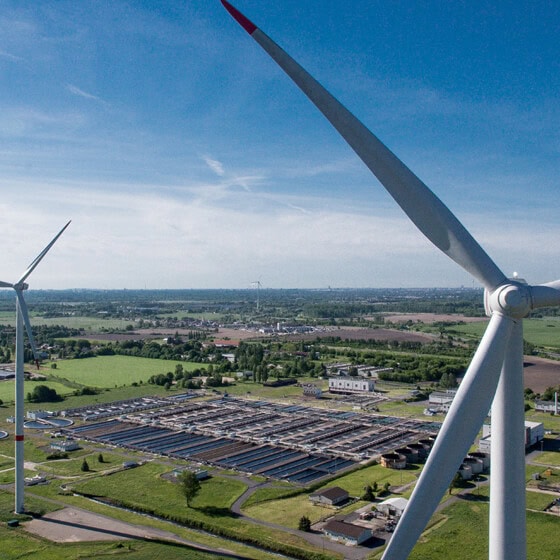
Image: Aerial view of Tegel-Schönerlinde | © Berliner Wasserbetriebe
A Single SCADA Server
for reporting
Manual Data Consolidation
Excel files | Handwritten records
Manual Validation
Outdated, incomplete data
Time Constraints
Significant manual effort
Solution
acron: All in One System
The team tested several products, but only acron was able to meet all requirements in one package – fully integrated into one system, with no need for additional software.
WHAT IS NEEDED |
» |
HOW ACRON SOLVES IT |
| Collect raw data from PLCs at all locations | » | Drivers for most industrial protocols |
| Compression and archiving | » | Built-in data compression algorithm saves disk space and speeds up processing |
| Validation and correction | » | A separate logic layer before writing to the database |
| Trend graphs | » | Built-in visualization and analytics tools |
| PDF/Excel reports | » | Report generator with charts and formula support |
| Export to external systems | » | Direct export to .xlsx, OPC UA, REST |
“Other than acron, we do not require any external or additional software to perform our tasks.”
Helmut Wiesener, Technical Consultant for Automation Engineering and Waterworks Control Systems (LSW) at BWB
Results & Added Value
Data Where It’s Needed
acron made data truly accessible. Previously, requests had to go through engineers. Now, the data can be exported, processed, visualized, or integrated into other systems — even by non-IT staff.
The company has opened up data access for those who need it most: analysts, engineers, and decision-makers.
HOW THE PROCESS WORKS
- Automatic and precise data collection from field devices.
- Transmission through several processing stages to a central server.
- Analysis and report generation using acron.
- Publication of reports on the internal company portal.
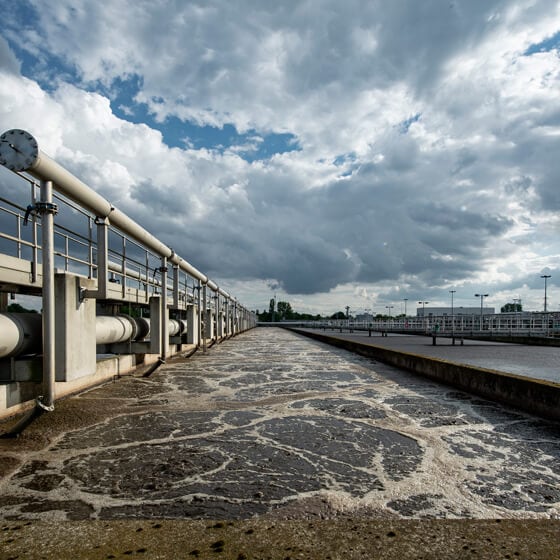
Image: Wastewater treatment | © Berliner Wasserbetriebe
Looking Ahead
Next Steps: Automate, Standardize, Grow
Automated Data Integration
for e.g., 300+ manually recorded pressure monitoring points
Reduction of Staff Workload
End of manual meter reading: easier work + improved measurement accuracy
Using acron Beyond the Water Treatment Plants
In the sales department and other companies within the group as well
Scalability
Standardization of all reports across a single analytics system
Image: Tegel water treatment plant | © Berliner Wasserbetriebe
Customer Profile
Berliner Wasserbetriebe
Berliner Wasserbetriebe is more than just a water supplier: it serves over 3.7 million people in Berlin and the surrounding areas, and also treats wastewater for an additional ~3.9 million residents.
With more than 170 years of history, around 4,200 employees, and ongoing technical advancements — including in the area of digital infrastructure — the company continuously invests in modernization.